Right now, 83% of restaurants don’t show up when someone asks AI where to eat.
That’s not a typo. According to SOCi’s 2026 Local Visibility Index, which analyzed over 350,000 business locations, more than four out of five restaurants are completely invisible in AI-generated recommendations.
Why does that suddenly matter? Because BrightLocal’s 2026 Local Consumer Review Survey found that 45% of consumers now use AI tools to find local businesses, up from just 6% the year before. That’s a seven-fold jump in twelve months. Over the same period, Google’s share of local discovery slipped from 83% to 71%.
So the restaurant marketing tips that worked in 2023 aren’t quite enough anymore. The way people find places to eat changed faster this year than it has in a decade.
Here’s the good news. The marketing tips for restaurants below don’t require a big budget. They just require knowing where diners are actually looking, and showing up there properly.
Why Marketing Tips for Restaurants Look Different in 2026
Let’s be honest about the landscape you’re competing in.
The National Restaurant Association projects industry sales of $1.55 trillion in 2026, but with real growth of only 1.3% after inflation. Read that again. The pie is barely growing.
Which means most of your growth has to come from someone else’s tables, not from a rising market. A restaurant marketing strategy isn’t a nice-to-have anymore. It’s how you take share.
Meanwhile, diner standards keep climbing. BrightLocal found 31% of consumers now refuse to visit a business rated below 4.5 stars, up from 17% just a year earlier. And 97% read reviews before deciding.
Your food might be excellent. But if nobody can find you, and the first thing they see is a half-empty profile with three reviews from 2022, they’re eating somewhere else. That’s the gap these marketing tips for restaurants are built to close.
Let’s fix that, starting with the cheapest wins.
Marketing Tip 1: Know Exactly Who You’re Feeding

Before you plan another promo or post another photo, answer one question. Who actually eats here?
Not “everyone.” Be specific.
Take Tegeh Resto in Bali. Their guests break down into four clear groups, and each one needs a completely different approach:
- International travelers looking for fine dining with local character, best reached through Instagram and travel creators
- Young couples wanting a romantic, exclusive dinner, who respond to atmospheric content on Instagram and TikTok
- Premium families on holiday, often reached through Facebook and partnerships with nearby villas and hotels
- Foodies and lifestyle seekers chasing an aesthetic moment, who want high-quality visuals of your signature dishes
Same restaurant. Four audiences. Four different messages.
Now apply that to yourself. Office workers grabbing lunch want a weekday special they can see quickly. Families want weekend value. Students want late-night deals. Once you know who you’re talking to, every other decision gets easier, from your menu design to which platform deserves your time.inkedIn, while families may respond better to Facebook ads or community group posts.
Marketing Tip 2: Claim Your Spot in AI Search Before Your Competitors Do
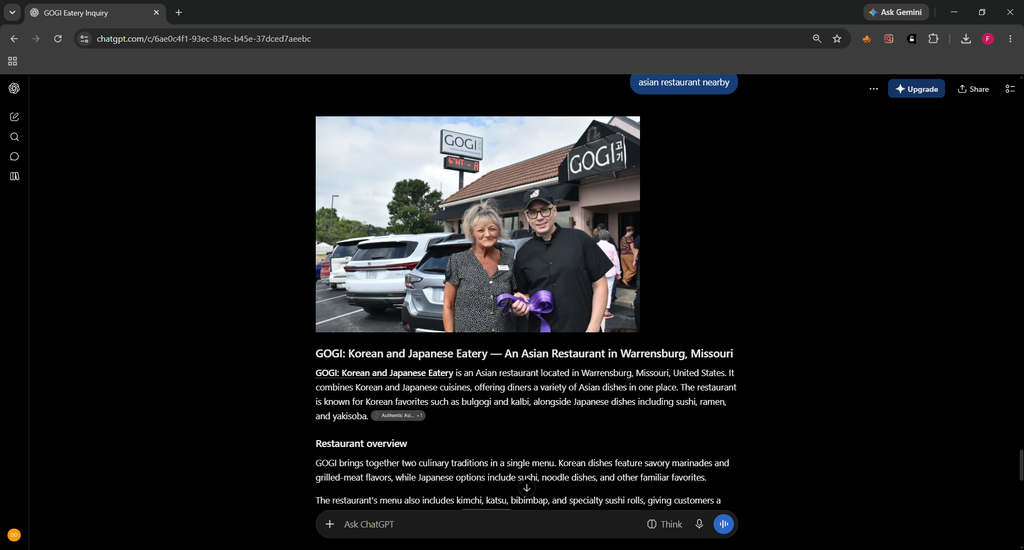
This is the newest piece of local restaurant marketing, and almost nobody is doing it yet. That’s exactly why it’s worth your attention.
When someone asks ChatGPT or Gemini for “the best ramen near me,” those tools don’t pull from one place. They synthesize from your Google Business Profile, review platforms, directories, and any real content about your restaurant across the web.
Which is why 83% of restaurants get skipped. There simply isn’t enough consistent information about them for AI to work with.
What you can do this week:
- Claim and complete your Google Business Profile. BrightLocal found only 35% of small businesses have one. Fill in every field: hours, menu link, address, phone, categories, and photos.
- Make sure your details match everywhere. Same name, same address, same phone across your website, social profiles, and every directory. Inconsistency confuses AI more than it confuses people.
- Get reviews on more than one platform. AI pulls from several sources, so a restaurant with reviews only on Google looks thinner than one with presence across Google, Facebook, and Yelp.
- Publish something real on your website. A short page describing your cuisine, neighborhood, and what makes you different gives AI something concrete to cite.
Most of your competitors will read that list and do nothing. That’s your window.
Marketing Tip 3: Treat Social Media as a Search Engine
Restaurant social media marketing isn’t just for keeping regulars warm anymore. It’s where discovery happens.
Research from MGH and the National Restaurant Association found that 74% of diners choose where to eat based on what they see on social media. Among Gen Z, TouchBistro’s Diner Trends Report puts that even higher, with 67% using social platforms to research restaurants before deciding.
People aren’t browsing your feed for fun. They’re evaluating whether you’re worth their evening.
What actually works:
- Post when people are hungry. Late morning and early evening beat midnight posting every time.
- Use short video. Reels and TikTok showing prep, plating, or a busy Friday night outperform static photos and cost nothing but a phone.
- Write captions with your location and dish names. Instagram content is now indexed by Google, so “wood-fired pizza in Seminyak” in your caption can surface in search results.
- Encourage tagging, then repost it. Customer photos convert better than polished brand shots, and they’re free.
Read this: Best Marketing Campaigns That Made Restaurants Go Viral
Marketing Tip 4: Let Your Visual Identity Do the Selling
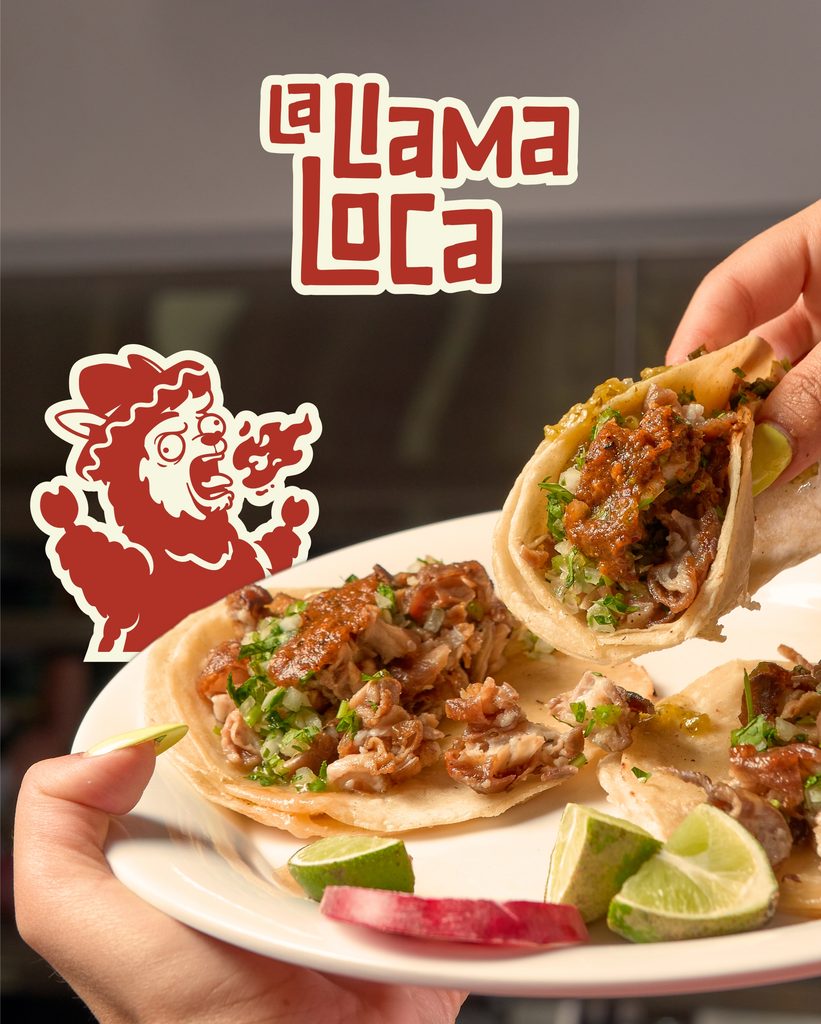
People eat with their eyes long before they taste anything.
If your logo looks dated, your menu is hard to read, and your Instagram doesn’t match your storefront, diners quietly assume the food is inconsistent too. Fair or not, that’s how it works.
Strong visual branding does three things at once. It builds instant credibility, makes you recognizable in a crowded feed, and lets you charge what your food is actually worth.
Where to focus:
- Keep logo, colors, and fonts identical everywhere. Menu, signage, packaging, social, delivery apps. Same everything.
- Invest in real food photography. One good shoot gives you months of content. Blurry phone shots quietly cost you customers.
- Design a menu people can actually read. Clear hierarchy, sensible sections, and space to breathe. A confusing menu slows service and lowers average spend.
At Koalart Creative, this is exactly what we build for restaurants, from logo and menu design through to packaging and social templates that keep everything consistent.a.
Marketing Tip 5: Run Promotions That Build Habits, Not Just Traffic
A discount fills seats once. A smart promotion creates a reason to come back.
Skip the generic “20% off” and try promotional marketing ideas for restaurants that reward repeat visits instead:
- Meal bundles that raise average spend while feeling like value, such as a main, side, and drink at a set price
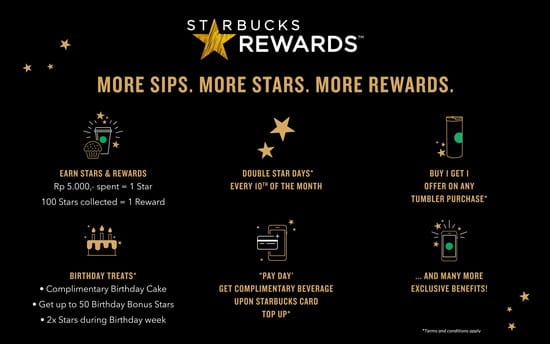
- Loyalty cards or digital rewards, even something as simple as buy five, get one free
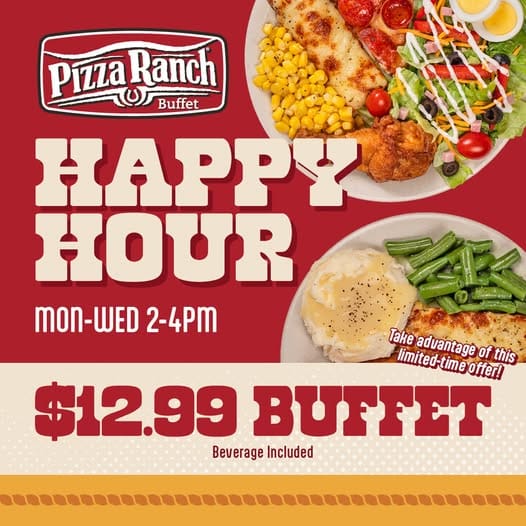
- Time-boxed offers like happy hour or weekend brunch that train people to come at specific times
- Birthday and anniversary perks, which cost little and generate genuine goodwill
One rule though: promotions should feel exciting, not desperate. Words like “this week only” create urgency. Permanent discounts just teach people your regular prices aren’t real.
Marketing Tip 6: Turn Reviews Into Your Best Salesperson
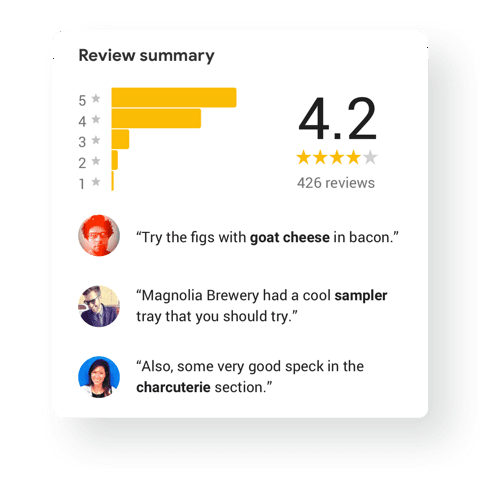
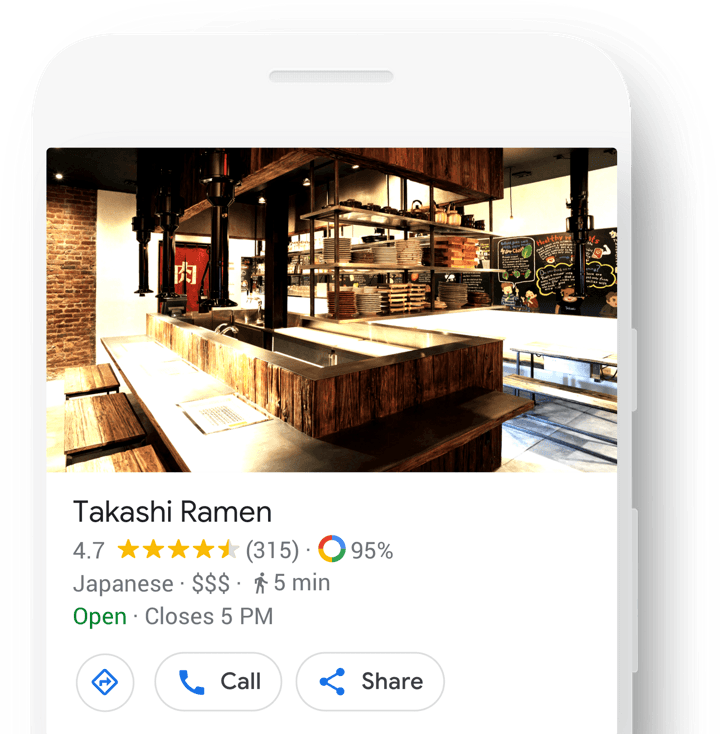
With 97% of consumers reading reviews, your review profile is doing more selling than any ad you’ll run.
BrightLocal also found something useful: consumers are noticeably less likely to trust a business that responds only to positive reviews, or only to negative ones. Responding to everything signals you’re actually paying attention.
What to do:
- Ask happy diners to leave a review. A small card with a QR code linking straight to your Google profile works well. Just never offer a reward for it, which violates platform rules and FTC guidelines.
- Reply to every review within a few days. Thank the good ones specifically, mentioning the dish they loved.
- Handle criticism calmly and publicly, then take it offline. Future customers are reading your response more closely than the complaint itself.
Marketing Tips for Restaurants: What to Do First
If you’re working out how to market a restaurant with limited time, here’s the order that matters most. One afternoon is enough to start.
- Claim and fully complete your Google Business Profile. It feeds AI search, local search, and maps all at once.
- Check your details match across your website, social profiles, and delivery apps.
- Reply to every unanswered review, starting with the negative ones.
- Post three pieces of short video content this week showing real food and real people.
- Fix your worst visual asset, whether that’s your menu, your logo, or the photos on your profile.
None of that requires a budget. All of it moves you closer to being the restaurant AI recommends and diners choose.
Even a small loyalty system can make a big difference in repeat business.
Read this: 10 Proven Marketing Strategies for Restaurants: Ultimate Hacks
Key Takeaways
- 83% of restaurants don’t appear in AI-generated local recommendations (SOCi, 2026), while 45% of consumers now use AI to find local businesses, up from 6% (BrightLocal, 2026).
- Industry sales are projected at $1.55 trillion in 2026, but real growth is only 1.3%, so growth mostly comes from competitors.
- 74% of diners choose restaurants based on social media (MGH / National Restaurant Association).
- 97% read reviews, and 31% now refuse businesses rated under 4.5 stars, up from 17% last year.
- The most effective restaurant marketing tips are still the cheapest: complete your Google profile, keep details consistent, respond to reviews, and post real short video.
- Visual consistency across menu, packaging, and social is what makes a small restaurant look established.
Ready to Make Your Restaurant Look the Part?
The marketing tips for restaurants in this guide will bring people to your door. Great branding is what convinces them to walk in, and come back.
At Koalart Creative, we help restaurants, cafés, and food brands build visual identities that hold together everywhere diners find them, from menus and packaging to social templates and signage.
Read this: 10 Proven Marketing Strategies for Restaurants: Ultimate Hacks